
TL;DR: Busan is South Korea’s ultimate coastal city – stunning beaches, ancient temples perched on sea cliffs, and some of the best street food in Asia. Best visited in September-October (warm weather, fewer crowds) or April-May (cherry blossoms along Haeundae). Budget $40-170/day depending on your travel style. Just 2.5 hours from Seoul by KTX. This busan travel guide 2026 covers neighborhoods, beaches, temples, food, transport, hotels, and a 4-day itinerary.
Why Visit Busan in 2026?
Busan is everything Seoul is not. Where Seoul is landlocked and intense, Busan is coastal and laid-back. South Korea’s second-largest city sits on the southeastern tip of the Korean peninsula, surrounded by mountains and the sea.
Think of Busan as Korea’s Barcelona – a beach city with world-class food, colorful neighborhoods, and a personality all its own. It is loud, proud, and deeply independent from the capital.
In 2026, Busan continues to grow as an international destination. The city’s film culture (home of the Busan International Film Festival), expanding craft beer scene, and new waterfront developments make it more exciting than ever. The recently expanded Busan Metro lines make getting around even easier.
Whether you are looking for temple hikes, seafood feasts, beach days, or vibrant night markets, Busan delivers on all fronts. And unlike Seoul, you can do it all without fighting massive tourist crowds.
Best Time to Visit Busan
Busan’s coastal location gives it milder winters and cooler summers compared to Seoul. The ocean breeze makes a real difference.
| Season | Months | Temperature | Best For | Crowd Level |
|---|---|---|---|---|
| Spring | Mar – May | 12 – 22 C | Cherry blossoms, temple visits, mild weather | Medium |
| Summer | Jun – Aug | 23 – 31 C | Beach season, festivals, nightlife | Very High |
| Autumn | Sep – Nov | 14 – 26 C | BIFF festival, hiking, perfect weather | Medium |
| Winter | Dec – Feb | 1 – 10 C | Seafood season, budget deals, hot springs | Low |
Our pick: Visit in late September to mid-October for the best combination of warm weather (20-25 C), low humidity, and the Busan International Film Festival. The beaches are still swimmable in September, and autumn colors start appearing on the temple trails.
Avoid: Late July to mid-August is peak monsoon season with heavy rainfall and extreme humidity. The beaches are packed shoulder-to-shoulder with domestic tourists during this period. If you want beach time without the chaos, go in June or early September.
Budget tip: Winter (December-February) offers the cheapest hotels and the best seafood. Busan’s winters are much milder than Seoul’s, rarely dropping below freezing. Hot spring spas (oncheon) are everywhere, making winter visits surprisingly comfortable.
Top 5 Neighborhoods – Where to Base Yourself
Busan is a spread-out city, so choosing the right neighborhood matters more than in compact Seoul. Here is a quick comparison to help you decide:
| Neighborhood | Best For | Vibe | Budget (per night) |
|---|---|---|---|
| Haeundae | Beach lovers, first-timers | Resort-like, modern, lively | $60 – $250 |
| Seomyeon | Nightlife, food, central location | Urban, energetic, local | $35 – $120 |
| Nampo-dong | Markets, culture, budget travelers | Traditional, bustling, authentic | $30 – $100 |
| Gwangan | Cafes, sunset views, young crowd | Trendy, relaxed, scenic | $40 – $150 |
| Gamcheon | Art, photography, unique stays | Colorful, artsy, hilly | $25 – $80 |
Haeundae – Best for First-Time Visitors and Beach Lovers
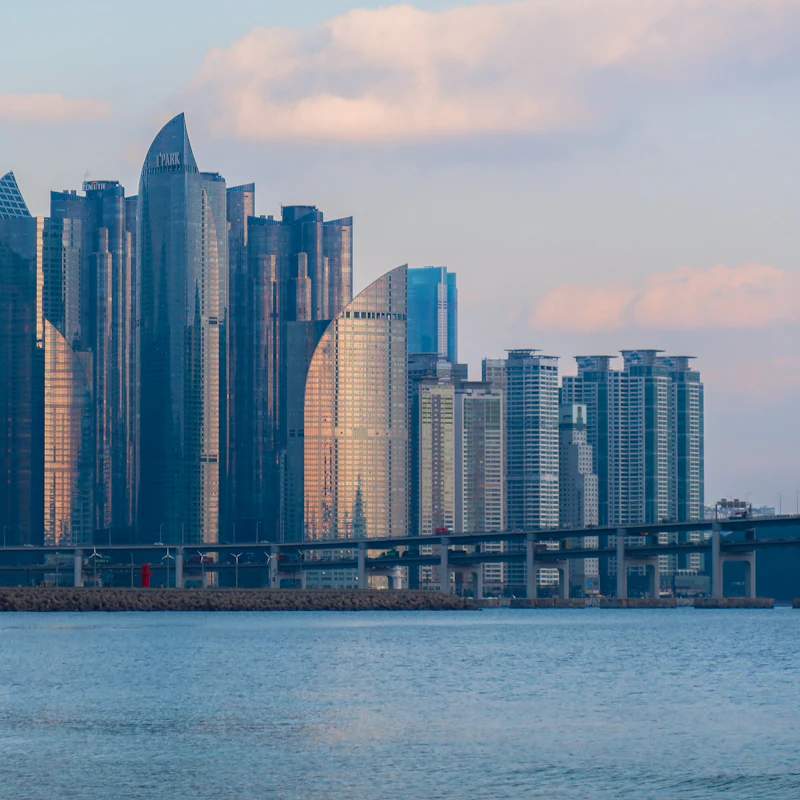
Busan’s most famous neighborhood and the city’s tourism hub. Haeundae Beach is the star attraction – a long crescent of white sand backed by high-rise hotels and seafood restaurants. Why stay here: Walking distance to the beach, Dongbaek Island coastal walk, the SEA LIFE Aquarium, and Busan’s best beachfront nightlife. The neighborhood has the highest concentration of international restaurants and English-speaking staff. If this is your first time in Busan, start here.
Seomyeon – Best for Nightlife and Foodies
Busan’s downtown core and the intersection of the two main subway lines. Seomyeon is where locals go to eat, drink, and shop. Why stay here: The most central location in the city with easy subway access to everywhere. Dwaeji gukbap (pork soup) alley is legendary, and the underground shopping streets are endless. Hotels here are significantly cheaper than Haeundae with better transport connections.
Nampo-dong – Best for Markets and Culture
The historic heart of Busan, home to Jagalchi Fish Market, BIFF Square, Gukje International Market, and the famous Gwangbok-dong shopping street. Why stay here: The most authentic Busan experience. Walk to major markets, catch the ferry to Yeongdo Island, and explore Yongdusan Park with Busan Tower. Budget accommodation is plentiful and excellent.
Gwangan – Best for Sunset Views and Cafe Culture
Gwangalli Beach is quieter and more local than Haeundae, with the stunning Gwangan Bridge as a backdrop. The beachfront is lined with cafes, craft beer bars, and restaurants. Why stay here: Better value than Haeundae with equally beautiful beach views. The bridge lights up at night in spectacular colors. Popular with Korean twenty-somethings and digital nomads.
Gamcheon – Best for Art and Photography
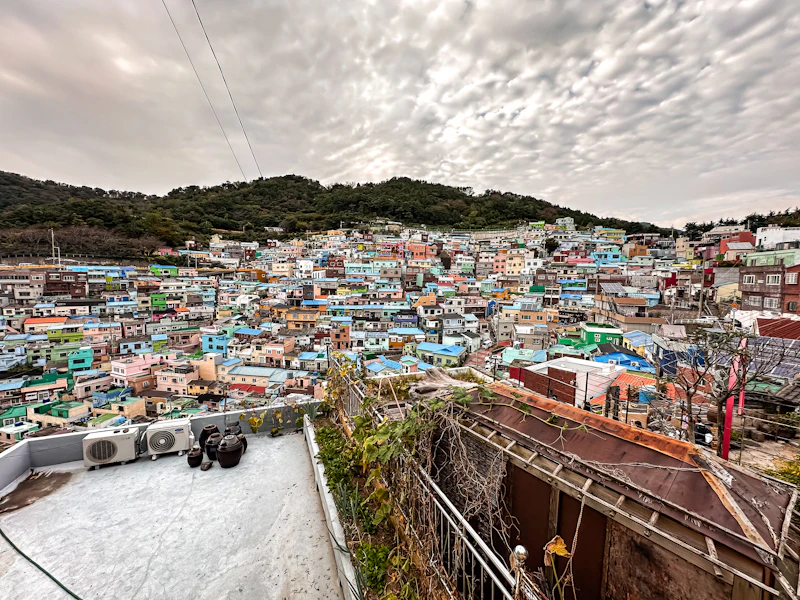
A former hillside slum transformed into one of Korea’s most Instagrammed destinations. Colorful houses stacked like building blocks, street art on every corner, and small galleries scattered throughout. Why stay here: Unique guesthouse experiences and the most photogenic neighborhood in all of Korea. Not ideal as a base for extended stays due to limited dining options and hilly terrain, but perfect for 1-2 nights of something different.
10 Must-Visit Attractions in Busan
1. Gamcheon Culture Village
Often called the “Machu Picchu of Korea” or “Busan’s Santorini,” this hillside village is a maze of brightly painted houses, murals, sculptures, and tiny galleries. Originally a settlement for Korean War refugees, the village was transformed into an art project starting in 2009.
Pro tip: Buy the stamp trail map (2,000 KRW) at the village entrance. It guides you through 12 checkpoints with stamps to collect. Complete the trail and exchange it for a postcard at the end. Go early (before 10am) to avoid tour bus crowds. Allow 2-3 hours to explore properly.
Getting there: Take subway Line 1 to Toseong Station (Exit 6), then local bus 1-1, 2, or 2-2 to the village entrance. The ride takes about 10 minutes.
2. Haedong Yonggungsa Temple
Korea’s most stunning temple location. While most Korean temples hide in the mountains, Haedong Yonggungsa sits directly on the ocean cliffs in northeastern Busan. Built in 1376 during the Goryeo Dynasty, the temple complex cascades down the rocky coastline with crashing waves below.
Pro tip: Visit at sunrise for the most spectacular views and smallest crowds. The 108-step staircase down to the main temple is lined with zodiac statues. On Buddha’s Birthday (May), the entire temple is decorated with thousands of paper lanterns – one of the most beautiful sights in Korea.
Getting there: Bus 181 from Haeundae. The temple is free to enter. Allow 1-2 hours for the visit.
3. Jagalchi Fish Market
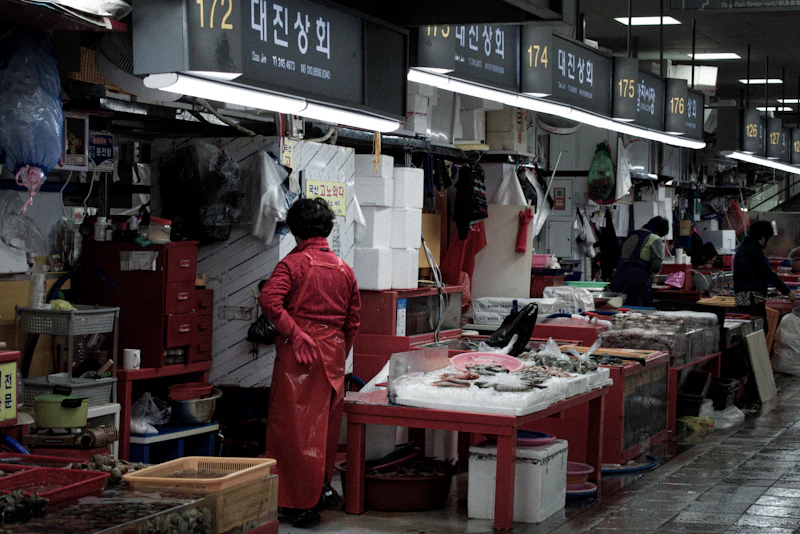
The largest seafood market in all of Korea. The ground floor is a massive wet market where vendors sell every type of sea creature imaginable – from live octopus to king crab to sea squirts. The real experience: Pick your fish on the ground floor, then take it upstairs to the restaurant floor where they will prepare it for you on the spot. Sashimi costs a fraction of what you would pay in Japan.
Pro tip: Go in the morning (before 11am) when the fish is freshest and the market is at its most energetic. Haggle gently – prices are flexible, especially for larger orders. A mixed sashimi platter for two runs about 30,000-50,000 KRW.
4. Haeundae Beach
South Korea’s most famous beach stretches 1.5 kilometers along the coast, backed by a skyline of hotels and apartments. The sand is clean and fine, the water is calm, and the facilities are excellent. Lifeguards are on duty from June through September.
Pro tip: Walk to the eastern end of the beach to find Dongbaek Island (actually a peninsula). The Dongbaek Coastal Walk is a beautiful 40-minute loop trail through a dense camellia forest with ocean views. At the tip, you will find the APEC House where world leaders met in 2005. For fewer crowds: Visit Songjeong Beach, one stop further on bus 181 – same quality sand, ten percent of the people.
5. Taejongdae Resort Park
A dramatic natural park on the southern tip of Yeongdo Island with sheer cliffs dropping into the deep blue sea. On a clear day, you can see Japan’s Tsushima Island across the Korea Strait. The park features dense forests, a lighthouse, an observation deck, and a pebble beach at the bottom of the cliffs.
Pro tip: Take the Danubi Train (3,000 KRW round trip) if you do not want to walk the hilly 4.3km loop road. Otherwise, walking the full loop takes about 2 hours and is well worth it. Best on clear days – the views are the entire point. Skip it if it is foggy.
6. BIFF Square and Gukje International Market
BIFF Square (Busan International Film Festival Square) is the original home of Asia’s most prestigious film festival. The sidewalk is embedded with handprints of famous Korean and international directors. Today, it is best known as Busan’s ultimate street food zone.
Right next door, Gukje International Market is a sprawling maze of covered alleys selling clothes, accessories, souvenirs, and more street food. Must-try: The ssiat hotteok (seed-filled sweet pancake) stalls along the main BIFF Square strip – the line is long, but it moves fast. Each hotteok costs just 1,000-2,000 KRW and is filled with sunflower seeds, pumpkin seeds, and brown sugar.
7. Beomeosa Temple
One of Korea’s most important Buddhist temples, founded in 678 AD on the slopes of Geumjeongsan Mountain. Unlike the touristy Haedong Yonggungsa, Beomeosa is a working temple with active monks, ancient stone pagodas, and a deeply spiritual atmosphere.
Pro tip: Combine Beomeosa with a hike up Geumjeongsan Mountain to the Geumjeong Fortress walls. The trail from the temple to the North Gate takes about 1.5 hours and offers stunning views of Busan and the coastline. Temple Stay programs are available for those who want an overnight meditation experience (60,000-80,000 KRW including meals).
8. Gwangalli Beach and Gwangan Bridge
Gwangalli Beach is the locals’ beach – less touristy than Haeundae but equally beautiful. The main attraction is the view of Gwangan Diamond Bridge, a 7.4km suspension bridge that lights up in dazzling colors after sunset. The beachfront promenade is packed with seafood restaurants, craft beer bars, and live music venues.
Pro tip: Find a beachfront cafe with a terrace (there are dozens) and order drinks while watching the bridge light show. Friday and Saturday nights feature special bridge lighting programs. The beach also hosts drone light shows and fireworks festivals throughout the year.
9. Songdo Cable Car (Busan Air Cruise)
Korea’s first public cable car, reopened in 2017 after decades of closure. The 1.6km ride crosses the open ocean between Songnim Park and Amnam Park, giving you bird’s-eye views of Songdo Beach, coastal cliffs, and the open sea below. The crystal cabins (with glass floors) are worth the upgrade for an extra thrill.
Pricing: Standard cabin 17,000 KRW round trip, crystal cabin 22,000 KRW round trip. Best time: Late afternoon for sunset views. Allow about 1.5 hours including wait time and exploring Amnam Park on the other side.
10. Busan Tower at Yongdusan Park
A 120-meter tower sitting atop Yongdusan Park in the center of Nampo-dong. The observation deck offers 360-degree views of the port, Yeongdo Island, Jagalchi Market, and the mountains surrounding Busan. Less crowded and cheaper than most city observation decks.
Pricing: 12,000 KRW for adults. Pro tip: Visit after dark when the city lights and bridge illuminations create a stunning panorama. The park itself is free and a pleasant place for an evening walk, with the famous 25-meter Dragon Statue and a flower clock.
Busan Food Guide – What to Eat and Where
Busan’s food is different from Seoul’s. The coastal location means seafood dominates, and the local specialty dishes are unique to this region. Busan people are proud of their food, and for good reason – portions are bigger, prices are lower, and the flavors are bold.
| Dish | What It Is | Price Range | Where to Try |
|---|---|---|---|
| Milmyeon | Cold wheat noodles in icy broth – Busan’s signature summer dish | 6,000 – 8,000 KRW | Gaegeum Milmyeon near Seomyeon |
| Dwaeji Gukbap | Rich pork bone soup with rice – the ultimate comfort food | 7,000 – 9,000 KRW | Dwaeji Gukbap Alley, Seomyeon |
| Ssiat Hotteok | Crispy pancake stuffed with seeds, nuts, and brown sugar | 1,000 – 2,000 KRW | BIFF Square, Nampo-dong |
| Hoe (Raw Fish) | Ultra-fresh sashimi platter with Korean accompaniments | 25,000 – 60,000 KRW | Jagalchi Fish Market |
| Korean BBQ | Grill-your-own beef and pork at the table | 12,000 – 35,000 KRW | Geonbae Street, Seomyeon |
| BIFF Square Street Food | Tteokbokki, odeng, fish cake skewers, and more | 1,000 – 5,000 KRW | BIFF Square, Nampo-dong |
Milmyeon – Busan’s Signature Dish
You have not truly visited Busan until you eat milmyeon. This cold wheat noodle dish was invented by Korean War refugees who settled in Busan and adapted the North Korean naengmyeon (buckwheat cold noodles) using locally available wheat flour. The result is a chewy, slippery noodle served in ice-cold beef broth with vinegar and mustard on the side.
Order it mul milmyeon (in broth) for the classic experience, or bibim milmyeon (mixed with spicy sauce) for a fiery kick. It is the perfect lunch on a hot Busan day.
Dwaeji Gukbap – Busan’s Soul Food
A hearty pork bone soup with rice, served with an array of condiments including salted shrimp, chives, and chili paste. Seomyeon’s Dwaeji Gukbap Alley has a dozen restaurants specializing in this dish, and most are open 24 hours. It is cheap, filling, and the ultimate hangover cure. Many locals eat this daily.
Ssiat Hotteok – The Best Street Snack in Korea
Regular hotteok (sweet Korean pancakes) are filled with brown sugar. Busan’s version adds seeds – sunflower seeds, pumpkin seeds, pine nuts, and sometimes peanuts. The combination of crispy fried dough, melted sugar, and crunchy seeds is addictive. The most famous stalls are at BIFF Square, where you will see lines wrapping around the block on weekends.
Jagalchi Sashimi Experience
Eating at Jagalchi Fish Market is an essential Busan experience. Here is how it works:
- Walk the ground floor and browse the live seafood tanks
- Choose your fish – point at what you want and negotiate the price
- Pay the vendor and they will prepare it on the spot
- Take it upstairs to the restaurant floor where you pay a small seating fee (about 3,000-5,000 KRW per person)
- Enjoy your ultra-fresh sashimi with soy sauce, wasabi, gochujang, and ssam (lettuce wraps)
Budget tip: A mixed sashimi platter for two costs about 30,000-50,000 KRW at the market versus 80,000-120,000 KRW at a beachfront restaurant for the same quality. The fish is identical – it all comes from the same boats.
Street Food Tour – BIFF Square and Gukje Market
The best self-guided food walk in Busan starts at BIFF Square and winds through Gukje International Market. Budget about 15,000-20,000 KRW for a full street food lunch hitting these highlights:
- Ssiat hotteok at the famous stalls (1,500 KRW)
- Eomuk (fish cake) on skewers with warm broth (1,000 KRW per skewer)
- Tteokbokki – spicy rice cakes (3,000 KRW)
- Bindaetteok – crispy mung bean pancake (3,000 KRW)
- Japchae – stir-fried glass noodles (4,000 KRW)
- Hotteok ice cream – a modern twist at specialty shops (3,500 KRW)
Getting Around Busan
Busan is more spread out than Seoul, so understanding your transport options saves time and money. The good news is that the system is modern, clean, and easy to navigate with English signage throughout.
| Transport | Cost | Best For | Tips |
|---|---|---|---|
| Subway | 1,350 KRW (~$1) | Major attractions, neighborhoods | 5 lines cover main areas. T-money card works here too |
| City Bus | 1,300 KRW | Temples, beaches, coastal areas | Naver Map or KakaoMap app for routes |
| Taxi | From 3,800 KRW | Late night, groups, hilly areas | Use Kakao T app. Taxis are very cheap in Busan |
| KTX from Seoul | 59,800 KRW | Getting to Busan from Seoul | 2.5 hours Seoul to Busan. Book at letskorail.com |
| SRT from Seoul | 52,600 KRW | Budget alternative to KTX | 2.5 hours from Suseo Station. Slightly cheaper |
The Busan Subway
Busan’s metro system has 5 lines covering most tourist areas. Line 1 (orange) is the most useful for tourists, connecting Nopo (for Beomeosa Temple) through Seomyeon and Nampo-dong to Dadaepo Beach. Line 2 (green) connects Seomyeon to Haeundae Beach.
Key tip: Your Seoul T-money card works on Busan’s subway and buses. No need to buy a separate card. If you do not have one, buy a Cashbee card (the Busan equivalent) at any convenience store for 2,500 KRW.
Getting to Busan from Seoul
| Option | Time | Cost | Best For |
|---|---|---|---|
| KTX Train | 2 hr 30 min | 59,800 KRW | Speed, comfort, convenience |
| SRT Train | 2 hr 30 min | 52,600 KRW | Budget alternative, departs from Suseo |
| Express Bus | 4 hr 30 min | 23,000 – 34,000 KRW | Budget travelers, comfortable seats |
| Domestic Flight | 1 hr | 50,000 – 120,000 KRW | Only if you find a sale fare |
Our recommendation: Take the KTX. Book at letskorail.com at least a few days ahead for the best seat selection. Trains run every 15-30 minutes from Seoul Station and arrive at Busan Station in the Nampo-dong area. No airport hassle, no traffic, city center to city center.
Budget tip: The express bus from Seoul Express Bus Terminal costs less than half the KTX price and the seats are comfortable. The 4.5-hour ride is not bad at all, and buses depart every 15-20 minutes throughout the day.
Gimhae International Airport
If you are flying directly into Busan, Gimhae Airport (PUS) is well-connected to the city. The Busan-Gimhae Light Rail connects the airport to the subway system. Transfer at Sasang Station (Line 2) to reach Seomyeon (20 minutes) or Haeundae (45 minutes). Airport buses and taxis are also available.
Where to Stay in Busan
Busan offers excellent accommodation at every price point. Here are top-rated hotels reviewed on TravelerGo, organized by area:
Haeundae Area
- Haeundae Dongbeck Hotel – Prime beachfront location steps from Haeundae Beach and Dongbaek Island coastal walk
- ELYSIA BOUTIQUE HOTEL – Stylish boutique property with modern design and personal service
- Centum Premier Hotel – Near Centum City and Shinsegae Department Store, ideal for shoppers
Seomyeon and Central Busan
- Hound Hotel Seomyeon – Great value in the heart of Seomyeon’s food and nightlife district
- Hotel Nongshim – Famous for its natural hot spring baths on-site, a unique Busan experience
- Cuddle Stay – Cozy and affordable option perfect for solo travelers and couples
Busan Station and Nampo-dong Area
- The BS Hotel Busan Station – Steps from Busan Station, perfect if arriving by KTX from Seoul
- Central Park Hotel Busan – Solid mid-range option near markets and attractions
- Prima Hotel Busan – Clean, well-located, and budget-friendly near Busan Station
- Hotel Maison – Charming boutique hotel with a European-inspired aesthetic
Pro tip: Book through Agoda for the best prices on Busan hotels. The platform often has exclusive deals for Korean hotels that are not available elsewhere, plus free cancellation on most properties.
Busan Budget Guide – How Much Does Busan Cost?
Busan is noticeably cheaper than Seoul across the board. Hotels, food, and transport all cost less. Here is a realistic daily budget breakdown:
| Category | Budget ($40-60/day) | Mid-Range ($80-120/day) | Luxury ($150-300/day) |
|---|---|---|---|
| Accommodation | $20 – $35 (guesthouse/hostel) | $50 – $80 (3-star hotel) | $120 – $250 (4-5 star hotel) |
| Food | $12 – $18 (street food and local restaurants) | $25 – $40 (mix of local and mid-range) | $40 – $80 (seafood feasts and fine dining) |
| Transport | $3 – $5 (subway and bus) | $5 – $10 (subway, bus, occasional taxi) | $10 – $25 (taxi everywhere) |
| Activities | $5 – $10 (free temples, beaches, markets) | $10 – $20 (cable cars, tower, aquarium) | $20 – $50 (premium experiences, boat tours) |
| Daily Total | $40 – $60 | $80 – $120 | $150 – $300 |
Money-saving tips for Busan:
- Many top attractions are free – Gamcheon Culture Village, Haedong Yonggungsa Temple, Beomeosa Temple, all beaches, and Taejongdae Park cost nothing to enter
- Eat at markets – a full meal at Jagalchi or BIFF Square costs under 10,000 KRW
- Stay in Seomyeon or Nampo-dong instead of Haeundae to save 30-50% on accommodation
- Use the Visit Busan Pass (48 hours: 55,000 KRW) for free entry to 30+ attractions including the Songdo Cable Car and Busan Tower
Practical Tips for Visiting Busan
Essential Apps
- KakaoMap or Naver Map – Google Maps works poorly in Korea. These local apps have accurate transit directions, restaurant reviews, and real-time bus tracking. KakaoMap has a partial English interface.
- Kakao T – Korea’s ride-hailing app (like Uber). Works perfectly for taxis throughout Busan.
- Papago – Naver’s translation app. Better than Google Translate for Korean. The camera feature translates menus and signs in real time.
- Visit Busan – The official tourism app with events, maps, and discount coupons.
Language Tips
English is less widely spoken in Busan than in Seoul. Haeundae and major tourist spots are fine, but in local neighborhoods like Seomyeon and Nampo-dong, you will need basic Korean phrases or a translation app. Here are the essentials:
- Annyeonghaseyo – Hello
- Gamsa hamnida – Thank you
- Eolma yeyo? – How much is this?
- Mashisseoyo – Delicious (use at restaurants – locals love it)
- Juseyo – Please give me (point at what you want and say this)
WiFi and Connectivity
Free WiFi is available at all subway stations, most cafes, and many restaurants. For constant connectivity, pick up a portable WiFi egg or Korean SIM card at Gimhae Airport or Busan Station. Prices start at about 5,000 KRW per day for a SIM with unlimited data.
Safety
Busan is extremely safe. South Korea consistently ranks among the safest countries in the world. Walking alone at night is normal and common, even in busy areas like Haeundae and Seomyeon. Petty theft is rare. The biggest “danger” is probably jaywalking fines. Use normal travel common sense and you will be fine.
Tipping
Do not tip in Busan. Tipping is not part of Korean culture and can actually cause confusion. Service charge is included in restaurant bills. Taxi drivers do not expect tips. The only exception is high-end international hotels where bellhops may accept a small tip.
4-Day Busan Itinerary
Here is a practical 4-day itinerary that covers Busan’s highlights without rushing. Adjust based on your interests and energy level.
| Day | Morning | Afternoon | Evening |
|---|---|---|---|
| Day 1 | Arrive in Busan, check in. Walk Haeundae Beach | Dongbaek Island Coastal Walk, The Bay 101 | Haeundae seafood dinner, beachfront bars |
| Day 2 | Haedong Yonggungsa Temple (go early) | Gamcheon Culture Village (stamp trail) | BIFF Square street food, Nampo-dong night walk |
| Day 3 | Jagalchi Fish Market (sashimi brunch) | Songdo Cable Car, Taejongdae Park | Gwangalli Beach sunset, bridge light show, cafes |
| Day 4 | Beomeosa Temple (optional Geumjeongsan hike) | Seomyeon shopping, dwaeji gukbap lunch | Busan Tower at sunset, Gukje Market, depart |
Day 1 – Haeundae and the Beach
Arrive by KTX or flight and head to your hotel. Spend the afternoon walking Haeundae Beach and the Dongbaek Island Coastal Walk. In the evening, have a seafood dinner at one of the beachfront restaurants and watch the sunset. Do not miss The Bay 101 – a waterfront dining and entertainment complex with stunning nighttime views of Haeundae’s skyline reflecting on the marina.
Day 2 – Temples and Colors
Start early at Haedong Yonggungsa Temple (arrive by 8am for the best light and fewest people). Head to Gamcheon Culture Village after lunch and spend 2-3 hours exploring the colorful alleys and art installations. End the day at BIFF Square for ssiat hotteok and an evening stroll through the Nampo-dong markets.
Day 3 – Seafood, Cliffs, and Bridges
Morning at Jagalchi Fish Market – pick your fish and have sashimi for brunch. Take the Songdo Cable Car across the ocean, then visit Taejongdae Park for dramatic cliff views. Finish the day at Gwangalli Beach for the sunset and the Gwangan Bridge light show from a beachfront cafe.
Day 4 – Mountains and Farewell
Hike to Beomeosa Temple in the morning for a peaceful temple experience. Head to Seomyeon for a proper dwaeji gukbap lunch and some shopping. End your trip at Busan Tower for panoramic sunset views, then browse Gukje Market for last-minute souvenirs before heading to the station or airport.
Frequently Asked Questions
How many days do you need in Busan?
3-4 days is ideal for most visitors. This gives you enough time to cover the main beaches, temples, markets, and food experiences without rushing. If you want to add day trips to Gyeongju (Korea’s ancient capital, 1 hour away) or explore the hiking trails in depth, extend to 5-6 days. Weekend visitors can hit the highlights in 2 days by focusing on Haeundae, Gamcheon, and Jagalchi Market.
Is Busan worth visiting if I am already going to Seoul?
Absolutely yes. Busan and Seoul are completely different experiences. Seoul is an inland megacity focused on palaces, shopping, and K-pop culture. Busan is a coastal city known for beaches, temples, and seafood. The 2.5-hour KTX train makes it easy to include both cities in one trip. Most travelers who visit both say Busan was the highlight of their Korea trip.
Is Busan safe for solo travelers?
Busan is one of the safest cities in Asia for solo travelers, including solo female travelers. South Korea has very low crime rates, well-lit streets, and 24-hour convenience stores on every block. Public transport runs late, taxis are safe and metered, and locals are generally helpful even with the language barrier. The main tourist areas (Haeundae, Seomyeon, Nampo-dong) are busy well into the night.
Can I swim at Busan beaches?
Yes, swimming is allowed from June through September when lifeguards are on duty and swimming zones are roped off. Haeundae Beach and Gwangalli Beach are the most popular swimming beaches. Outside of the official swimming season, you can still walk the beaches and enjoy the scenery, but swimming is not recommended due to cold water temperatures and the absence of lifeguards. Water shoes are recommended for rocky areas.
How do I get from Seoul to Busan?
The KTX high-speed train is the best option. It takes 2.5 hours from Seoul Station to Busan Station, costs 59,800 KRW one-way, and runs every 15-30 minutes throughout the day. Book tickets at letskorail.com. Budget travelers can take the express bus (4.5 hours, 23,000-34,000 KRW) from Seoul Express Bus Terminal. Flights take 1 hour but are rarely cheaper than the train once you factor in airport time.
What is the best area to stay in Busan?
Haeundae is the best area for first-time visitors thanks to its beach access, tourist infrastructure, and variety of restaurants and hotels. Seomyeon is best for travelers who want a central location with great food and nightlife at lower prices. Nampo-dong is ideal for market lovers and budget travelers. Gwangan offers a more local, relaxed beach experience. Choose based on your priorities – beach (Haeundae), food and nightlife (Seomyeon), culture and markets (Nampo-dong), or laid-back vibes (Gwangan).
Final Thoughts – Why Busan Should Be on Your 2026 Travel List
Busan is one of those rare cities that delivers on every front. World-class beaches that rival Southeast Asia. Ancient temples perched on dramatic ocean cliffs. Street food that will ruin you for any other city. And a local culture that is warm, loud, proud, and endlessly entertaining.
The city is still under the radar compared to Seoul, Tokyo, and Bangkok, which means fewer tourist crowds, lower prices, and a more authentic Korean experience. In 2026, there has never been a better time to visit – new developments, improved transport, and growing international flight connections make Busan more accessible than ever.
Whether you come for the seafood at Jagalchi, the colors at Gamcheon, the waves at Haeundae, or the serenity at Haedong Yonggungsa, Busan will not disappoint. It is, quite simply, one of the best travel destinations in Asia.
Ready to book your Busan trip? Find the best hotel deals on Agoda – with free cancellation on most properties and prices up to 40% lower than other booking platforms for Korean hotels. Start planning your 2026 Busan adventure today.