
Korea Transportation Guide 2026: How to Get Around Like a Local
Navigating South Korea as a foreign traveler is surprisingly easy once you understand the system. From the lightning-fast KTX bullet trains to the incredibly efficient subway networks, Korea’s public transportation infrastructure is among the best in the world. This comprehensive korea transportation guide covers everything you need to know to travel across the country like a seasoned local in 2026.
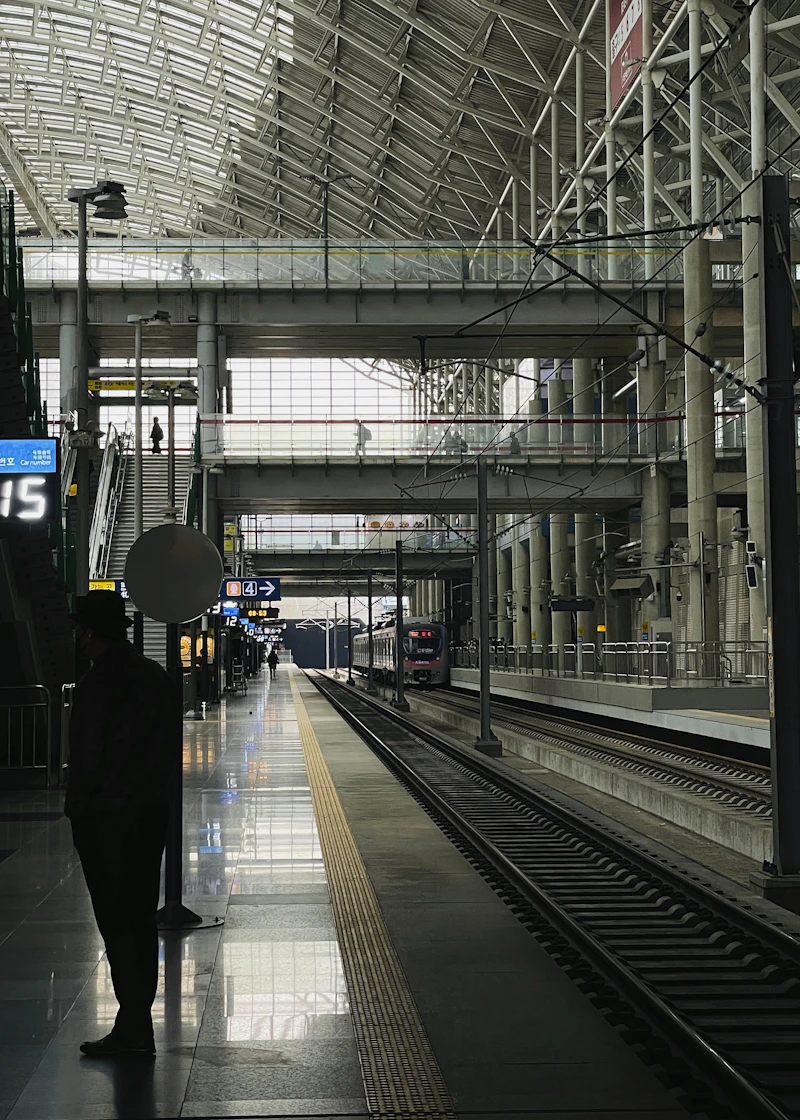
TL;DR – Korea Transportation Quick Summary
- Get a T-money card immediately at the airport or any convenience store (2,500 KRW). It works on subways, buses, and taxis nationwide.
- Seoul subway is your best friend — 9 lines covering virtually every tourist spot, costing 1,250-2,150 KRW per ride.
- KTX high-speed trains connect Seoul to Busan in just 2.5 hours. Book on the Korail app for the best deals.
- Naver Map is essential — Google Maps has limited transit data in Korea. Download it before your trip.
- Taxis are affordable — base fare starts at 4,800 KRW. Use Kakao T app to hail cabs without speaking Korean.
- Airport to Seoul — AREX express train from Incheon Airport takes 43 minutes and costs only 9,500 KRW.
T-money Card: Your Essential Travel Companion
Before you do anything else in Korea, get a T-money card. This rechargeable transit card is the single most important item for getting around the country efficiently. Think of it as Korea’s equivalent of London’s Oyster card or Tokyo’s Suica card — but arguably even more versatile.
Where to Buy a T-money Card
T-money cards are available at the following locations throughout Korea:
- Convenience stores — CU, GS25, 7-Eleven, and Emart24 locations nationwide sell T-money cards. This is the most common and easiest option.
- Incheon Airport — Available at convenience stores in the arrivals hall and at dedicated T-money vending machines.
- Subway station vending machines — Most major stations have automated machines that sell and recharge cards.
- Tourist information centers — Often carry special limited-edition tourist T-money cards with Korean designs.
T-money Card Costs and Savings
| Item | Cost | Notes |
|---|---|---|
| Standard T-money card | 2,500 KRW (~$1.90 USD) | Non-refundable card fee |
| Tourist T-money card | 4,000 KRW (~$3.00 USD) | Souvenir designs, same functionality |
| Minimum recharge | 1,000 KRW | Cash only at convenience stores |
| Maximum balance | 500,000 KRW | More than enough for any trip |
| Discount per ride (vs cash) | 100 KRW saved | T-money users pay less than single-use tickets |
| Transfer discount | Free within 30 min | Bus-to-subway and subway-to-bus transfers are free |
The T-money card works on all subways, city buses, intercity buses, some taxis, and even at convenience stores for small purchases. You can also use it at vending machines inside train stations. When you leave Korea, you can get your remaining balance refunded (minus a 500 KRW fee) at any convenience store, as long as the balance is under 20,000 KRW.
Pro tip: If you have a newer iPhone or Samsung phone, you can add a mobile T-money card directly to your phone through Apple Pay or Samsung Pay, eliminating the need for a physical card entirely.
Subway Systems: Seoul, Busan, and Daegu
Korea’s subway systems are clean, punctual, safe, and incredibly easy to navigate for foreigners. All stations have signage in Korean, English, Chinese, and Japanese. Announcements are made in multiple languages, and the color-coded line systems make transfers intuitive even for first-time riders.
Seoul Metro
The Seoul Metropolitan Subway is one of the largest and most efficient metro systems in the world. With 23 lines (including the main numbered lines plus regional extensions), it covers virtually every corner of the greater Seoul metropolitan area. Trains run from approximately 5:30 AM to midnight, with frequencies of 2-3 minutes during rush hours and 5-6 minutes during off-peak times.
Key tourist lines include Line 1 (Seoul Station, Jongno, Dongdaemun), Line 2 (Gangnam, Hongdae, Myeongdong transfer), Line 3 (Gyeongbokgung, Anguk for Bukchon), and Line 4 (Myeongdong, Itaewon transfer). The Gyeongui-Jungang Line is excellent for day trips to Paju and the DMZ area.
Busan Metro
Busan’s metro system has 6 lines covering all major areas of Korea’s second-largest city. Line 1 runs along the coast connecting Nopo (KTX station) to Dadaepo Beach, passing through Seomyeon, Nampo-dong, and Jagalchi Fish Market. Line 2 connects to Haeundae Beach and Centum City. The Donghae Line is a scenic coastal route perfect for reaching lesser-known beaches.
Daegu Metro
Daegu has 3 metro lines that efficiently cover the downtown core and major attractions. While smaller than Seoul or Busan’s systems, it is perfectly adequate for tourists visiting Daegu’s famous markets and temples. The monorail Line 3 offers elevated views of the city.
Subway Comparison Table
| Feature | Seoul Metro | Busan Metro | Daegu Metro |
|---|---|---|---|
| Number of lines | 23 (9 main + extensions) | 6 | 3 |
| Total stations | 700+ | 134 | 89 |
| Base fare (T-money) | 1,250 KRW | 1,250 KRW | 1,250 KRW |
| Single-use ticket | 1,350 KRW | 1,350 KRW | 1,350 KRW |
| Operating hours | 5:30 AM – 12:00 AM | 5:30 AM – 12:00 AM | 5:30 AM – 11:30 PM |
| Peak frequency | 2-3 minutes | 5-6 minutes | 6-8 minutes |
| Free Wi-Fi | Yes (all stations/trains) | Yes (all stations/trains) | Yes (most stations) |
| English signage | Excellent | Good | Moderate |
| T-money compatible | Yes | Yes | Yes |
| Best for tourists | Lines 1, 2, 3, 4 | Lines 1, 2 | Lines 1, 2 |
KTX High-Speed Train: Connecting Korea’s Major Cities
The KTX (Korea Train Express) is Korea’s pride and joy when it comes to intercity travel. Reaching speeds of up to 305 km/h, the KTX makes it possible to travel from Seoul to Busan — the entire length of the country — in just 2 hours and 30 minutes. The trains are modern, comfortable, and remarkably punctual, with an on-time rate exceeding 99%.
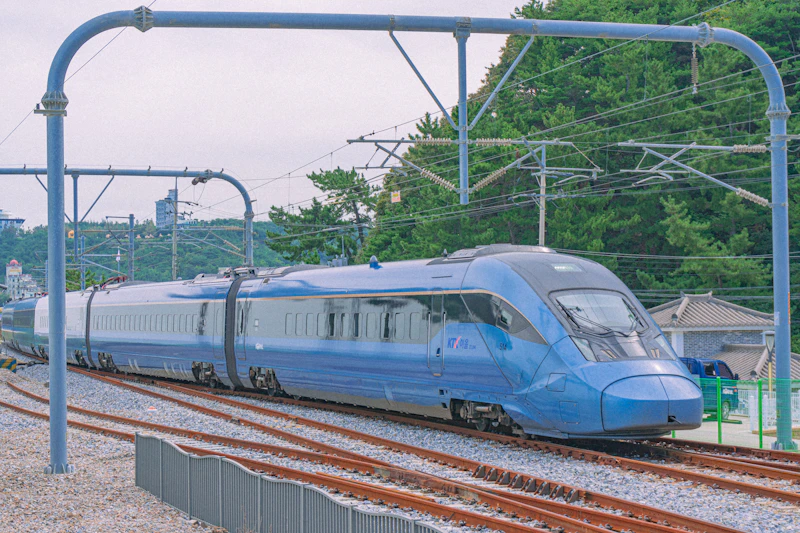
KTX trains depart from Seoul Station (located in central Seoul, directly connected to subway Lines 1 and 4) and from Yongsan Station. There are two main lines: the Gyeongbu Line running south to Busan, and the Honam Line running southwest to Mokpo. Together, these routes connect virtually every major city in South Korea.
KTX Routes, Travel Times, and Prices
| Route | Travel Time | Standard Price | Frequency | Line |
|---|---|---|---|---|
| Seoul → Busan | 2h 30min | 59,800 KRW (~$45) | Every 15-30 min | Gyeongbu |
| Seoul → Daejeon | 50 min | 23,700 KRW (~$18) | Every 15-30 min | Gyeongbu |
| Seoul → Daegu | 1h 40min | 43,500 KRW (~$33) | Every 20-30 min | Gyeongbu |
| Seoul → Gyeongju | 2h 10min | 52,600 KRW (~$40) | Every 30-60 min | Gyeongbu |
| Seoul → Jeonju | 1h 30min | 33,800 KRW (~$26) | Every 30-60 min | Honam |
| Seoul → Gwangju | 1h 50min | 41,200 KRW (~$31) | Every 30-60 min | Honam |
| Seoul → Mokpo | 2h 30min | 52,100 KRW (~$40) | Every 60 min | Honam |
| Seoul → Gangneung | 1h 50min | 27,600 KRW (~$21) | Every 60 min | Gangneung |
Booking tips: Reserve your KTX tickets through the Korail app (available in English) or at the station ticket counters. During peak travel periods — Chuseok (September/October), Lunar New Year (January/February), and summer holidays — tickets sell out fast. Book at least 1-2 weeks in advance for holiday travel. Early-bird and off-peak discounts can save you 10-30% on standard fares.
SRT: The Alternative High-Speed Train
The SRT (Super Rapid Train) is a newer high-speed rail service that launched in 2016 as a private competitor to KTX. SRT trains depart from Suseo Station in southeastern Seoul (connected to Subway Line 3 and the Bundang Line), rather than Seoul Station. The trains travel on the same tracks as KTX for most routes and offer nearly identical speeds and comfort levels.
Why consider SRT over KTX? The fares are typically 5-10% cheaper than KTX for the same routes. Suseo Station is also less crowded and easier to navigate than the bustling Seoul Station. However, if your hotel is closer to central Seoul, the KTX from Seoul Station may be more convenient. SRT covers the Gyeongbu Line (to Busan) and the Honam Line (to Mokpo), but does not serve all intermediate stations that KTX does.
Book SRT tickets through the SRT app (available in English) or at Suseo Station. The SRT app occasionally offers flash sales and promotions that make it even more affordable than KTX.
Intercity Express Buses: The Budget Alternative
Korea’s intercity express bus network is an excellent budget alternative to the KTX, covering routes to virtually every city and town in the country — including many destinations not served by rail. The buses are modern, comfortable, and equipped with Wi-Fi and USB charging ports. There are two classes: standard (ilban) and premium (ujung), with the latter offering wider seats and more legroom for a modest surcharge.
Express buses depart from major terminals in each city. In Seoul, the main terminals are Seoul Express Bus Terminal (Gangnam area, Subway Line 3/7/9), Dong Seoul Terminal (east Seoul, Subway Line 2), and Sangbong Terminal (northeast Seoul, Subway Line 7).
KTX vs. Intercity Bus Comparison
| Route | KTX Time | KTX Price | Bus Time | Bus Price | Savings |
|---|---|---|---|---|---|
| Seoul → Busan | 2h 30min | 59,800 KRW | 4h 20min | 23,000 KRW | 61% |
| Seoul → Daejeon | 50 min | 23,700 KRW | 2h 00min | 9,600 KRW | 59% |
| Seoul → Daegu | 1h 40min | 43,500 KRW | 3h 30min | 18,700 KRW | 57% |
| Seoul → Jeonju | 1h 30min | 33,800 KRW | 2h 40min | 13,800 KRW | 59% |
| Seoul → Gangneung | 1h 50min | 27,600 KRW | 2h 40min | 14,600 KRW | 47% |
| Seoul → Gwangju | 1h 50min | 41,200 KRW | 3h 30min | 17,300 KRW | 58% |
Book intercity bus tickets on the T-money GO app or at the terminal ticket windows. Unlike KTX, bus tickets rarely sell out except during major holidays, so last-minute bookings are usually fine. Night buses (yagan) operate on popular routes like Seoul-Busan, departing around midnight and arriving early morning — a clever way to save on a night of accommodation.
Local City Buses
Every Korean city has an extensive local bus network that reaches areas the subway cannot. While city buses can seem intimidating at first due to the predominantly Korean signage and announcements, using the Naver Map app makes them remarkably easy to navigate. Simply enter your destination, and Naver Map will tell you exactly which bus to take, where to board, when to get off, and even show you the bus’s real-time location.
In Seoul, buses are color-coded by type:
- Blue buses — Long-distance trunk routes crossing the city, connecting major areas
- Green buses — Shorter feeder routes connecting neighborhoods to subway stations
- Red buses — Express routes to satellite cities and suburban areas in Gyeonggi Province
- Yellow buses — Circular routes within specific neighborhoods and tourist areas
Tap your T-money card when boarding and again when exiting the bus. If you transfer to another bus or the subway within 30 minutes, the transfer is free (you only pay the distance-based difference, if any). Seoul bus fare starts at 1,200 KRW with T-money.
Taxis in Korea: Affordable and Reliable
Korean taxis are clean, metered, and much more affordable than taxis in most Western countries. They are an excellent option for short trips, late-night travel after the subway closes, or when you are carrying heavy luggage. All taxis are required by law to use meters, so you should never have to negotiate fares within city limits.
Taxi Types and Fare Comparison
| Taxi Type | Color | Base Fare | Per km Rate | Best For |
|---|---|---|---|---|
| Regular (ilban) | Orange/Silver | 4,800 KRW | ~100 KRW per 131m | Most trips, budget-conscious travelers |
| Deluxe (mobeom) | Black | 7,000 KRW | ~200 KRW per 151m | Extra comfort, more trunk space, better service |
| Jumbo (daebyeong) | Black (van) | 7,000 KRW | ~200 KRW per 151m | Groups of 5-8, lots of luggage, airport runs |
| International | Orange (marked) | 4,800 KRW | Same as regular | Drivers speak English, Japanese, or Chinese |
Important notes about Korean taxis: A late-night surcharge of 20% applies between midnight and 4:00 AM. Tipping is not expected or customary. Most taxis accept T-money cards and credit cards. If your driver seems lost, pull up the destination on Naver Map and show them the Korean address.
Kakao T: The Must-Have Taxi App
Kakao T is Korea’s dominant ride-hailing app, similar to Uber (which has limited presence in Korea). With Kakao T, you can hail taxis without speaking Korean — simply enter your pickup and drop-off locations in the app, and a nearby driver will accept the ride. The app shows the estimated fare, driver rating, and real-time tracking.
Kakao T offers several vehicle options including regular taxis, deluxe taxis, and Kakao T Blue (a premium service with higher-rated drivers). You can pay through the app with a registered credit card, making the transaction completely seamless. Download Kakao T and register before arriving in Korea for the smoothest experience.
Rental Cars in Korea: When You Actually Need One
For most trips to Korea, you do not need a rental car. Public transportation is so efficient in mainland Korea that a car would actually slow you down in cities — parking is expensive and traffic in Seoul is notoriously congested. However, there is one major exception: Jeju Island.
Jeju Island, Korea’s largest island located off the southern coast, has limited public transportation compared to the mainland. A rental car on Jeju gives you the freedom to explore hidden beaches, volcanic craters, coastal roads, and countryside restaurants at your own pace. Most of Jeju’s best attractions — from Hallasan National Park trailheads to the scenic Yongmeori Coast — are best accessed by car.
Rental Car Requirements
- International Driving Permit (IDP) — Required for all foreign visitors. Obtain one in your home country before traveling to Korea. A foreign driver’s license alone is not accepted.
- Minimum age — 21 years old (some companies require 26+ for certain vehicle classes)
- Valid passport — Needed at the rental desk along with your IDP
- Insurance — Comprehensive coverage is strongly recommended. Basic insurance is usually included, but CDW (Collision Damage Waiver) and liability coverage should be added.
Major rental companies on Jeju include Lotte Rent-a-Car, SK Rent-a-Car, and Jeju Rent-a-Car. Prices start from approximately 40,000-60,000 KRW per day for a compact car. Book in advance during peak summer (July-August) and autumn foliage season. Jeju drives on the right side of the road, same as mainland Korea. Navigation is straightforward using Naver Map or KakaoMap, both of which provide real-time traffic and turn-by-turn directions.
Getting from Incheon Airport to Seoul
Incheon International Airport (ICN) is located about 60 km west of central Seoul on Yeongjong Island. There are four main ways to reach the city, each with different trade-offs between speed, cost, and convenience. Here is a complete breakdown to help you choose the best option for your situation.
Incheon Airport to Seoul: Complete Comparison
| Option | Destination | Travel Time | Cost | Best For |
|---|---|---|---|---|
| AREX Express | Seoul Station | 43 minutes | 9,500 KRW (~$7) | Speed + value — no stops, direct to Seoul Station |
| AREX All-Stop | Seoul Station (via stops) | 58 minutes | 1,250-4,750 KRW | Budget travelers — connects to multiple subway lines |
| Airport Limousine Bus | Various hotels/districts | 60-90 minutes | 10,000-17,000 KRW | Direct to hotel areas — Myeongdong, Gangnam, Hongdae |
| Taxi | Anywhere in Seoul | 60-90 minutes | 65,000-100,000 KRW | Groups of 3-4, late-night arrivals, heavy luggage |
Our recommendation: For most travelers, the AREX Express train offers the best combination of speed and value. It runs every 30-40 minutes from the airport’s underground station directly to Seoul Station with no intermediate stops. From Seoul Station, you can easily transfer to subway Lines 1 or 4 to reach your hotel. If your hotel is in Gangnam, Hongdae, or Myeongdong, the airport limousine bus may be more convenient as it drops you closer to your destination.
One important note for late-night arrivals: the AREX Express last train departs around 10:50 PM. If you arrive after that, your options are the airport limousine bus (last buses run until midnight depending on the route) or a taxi. Keep approximately 80,000 KRW in cash as a backup for a late-night taxi to the city center.
Getting from Gimhae Airport to Busan
Gimhae International Airport (PUS) serves Busan and is much closer to the city center than Incheon is to Seoul, making the transfer significantly easier and cheaper. The airport is located in the western part of the Busan metropolitan area, and there are several convenient options to reach downtown.
The Busan-Gimhae Light Rail connects the airport to the Busan Metro system. Take the light rail to Sasang Station, then transfer to Busan Metro Line 2 — from there you can reach Seomyeon (20 minutes), Haeundae (45 minutes), or any other part of the city. The total fare is approximately 1,700-2,200 KRW depending on your final destination.
Alternatively, airport limousine buses run directly to Haeundae Beach area (about 60 minutes, 7,000 KRW) and to Busan Station/Nampo-dong area (about 40 minutes, 6,000 KRW). A taxi from Gimhae Airport to Haeundae costs approximately 30,000-40,000 KRW and takes 40-60 minutes depending on traffic.
Essential Transport Apps for Korea
Having the right apps on your phone is crucial for navigating Korea efficiently. Here are the must-have transport apps, listed in order of importance.
| App | Platform | English Support | Primary Use | Why You Need It |
|---|---|---|---|---|
| Naver Map | iOS / Android | Yes | Navigation, transit directions | Best overall map app for Korea — far superior to Google Maps for transit routing, bus arrival times, and walking directions |
| KakaoMap | iOS / Android | Yes | Navigation, place search | Excellent alternative to Naver Map — some users prefer its interface. Better for finding restaurants and cafes by category |
| Kakao T | iOS / Android | Partial | Taxi hailing | Essential for getting taxis — enter destination in-app, no Korean needed, see estimated fare before booking |
| Korail Talk | iOS / Android | Yes | KTX train booking | Official app for booking KTX and other Korail train tickets. Supports foreign credit cards and e-tickets |
| SRT | iOS / Android | Yes | SRT train booking | Needed if you prefer SRT high-speed trains from Suseo Station — often has cheaper fares than KTX |
| T-money GO | iOS / Android | Partial | Bus ticket booking | Book intercity and express bus tickets. Check schedules and seat availability in real-time |
Critical note about Google Maps: Unlike most countries, Google Maps has very limited functionality in Korea due to government mapping data regulations. Transit directions are incomplete, walking routes are inaccurate, and many places do not show up correctly. Always use Naver Map as your primary navigation app in Korea. Download it before your trip and save your hotel location for easy access.
Money-Saving Transportation Tips
Smart travelers can significantly reduce their transportation costs in Korea with these proven strategies:
- Use the transfer discount system — Your T-money card gives you free transfers between buses and subways within 30 minutes. Plan your routes to take advantage of this.
- Book KTX early for discounts — Advance purchase tickets can be 10-30% cheaper. The Korail app shows all available discount options when you search for tickets.
- Consider the Korail Pass — Foreign tourists can purchase a Korail Pass for unlimited KTX and train travel for 2, 3, 4, or 5 days. The 3-day pass costs approximately 138,000 KRW — if you plan to take 3+ long-distance KTX trips, this pays for itself quickly.
- Take night buses for long routes — Night express buses to Busan or other cities save you both transportation costs and one night of accommodation.
- Walk in downtown areas — Many of Seoul’s best attractions (Gyeongbokgung, Bukchon, Insadong, Myeongdong, Namsan) are within walking distance of each other. Walking is often faster than navigating subway transfers for short distances.
- Use the AREX All-Stop train — At 1,250 KRW from Incheon Airport to Gimpo Airport Station (and transfer to Seoul Metro), the all-stop AREX is a fraction of the Express train price.
Explore More of Korea
Now that you know how to get around Korea, it is time to plan your adventures in each city. Check out our detailed destination guides:
- Seoul Travel Guide 2026: Complete Itinerary for First-Time Visitors
- Busan Travel Guide 2026: Beaches, Temples, and Street Food
- Jeju Island Guide 2026: Nature, Hiking, and Hidden Gems
Book Your Korea Accommodation
Finding the right place to stay is just as important as knowing how to get around. Korea offers everything from traditional hanok guesthouses to world-class luxury hotels, with excellent options at every price point.
Find the Best Korea Hotel Deals on Agoda
Agoda consistently offers the lowest hotel prices in Asia, with special discounts on Korean properties. Whether you are looking for a 5-star hotel in Gangnam, a beachfront resort in Busan, or a cozy guesthouse in Jeonju’s Hanok Village, Agoda’s selection of Korean accommodations is unmatched. Many properties offer free cancellation, making it easy to adjust your plans as your itinerary takes shape.
Frequently Asked Questions
Is public transportation in Korea easy for foreigners who don’t speak Korean?
Yes, Korea’s public transportation system is very foreigner-friendly. All subway stations have signage in English, Chinese, and Japanese in addition to Korean. Announcements on subways and many buses are made in multiple languages. The Naver Map app provides English-language transit directions. For taxis, the Kakao T app eliminates the language barrier by letting you input your destination digitally. Korea consistently ranks among the easiest Asian countries to navigate as an English-speaking traveler.
How much should I budget for transportation in Korea?
For a typical week-long trip based in Seoul with day trips, budget approximately 80,000-120,000 KRW (about $60-90 USD) for local transportation (subway, buses, occasional taxis). Add 60,000-120,000 KRW per intercity KTX trip. A daily Seoul subway-and-bus budget of 5,000-10,000 KRW is realistic for most tourists. The T-money transfer discount system keeps costs remarkably low if you plan your routes efficiently.
Can I use credit cards on public transportation in Korea?
Subway ticket vending machines accept credit cards, but for buses and taxis, a T-money card is the standard payment method. Some taxis accept credit cards directly, and Kakao T allows credit card payment through the app. We strongly recommend getting a T-money card upon arrival — the 100 KRW per-ride discount and free transfer benefits add up quickly, and it eliminates the hassle of buying individual tickets for every ride.
Is Uber available in Korea?
Uber has a very limited presence in Korea. The Uber app works but primarily connects you to regular Korean taxis (essentially functioning as a taxi-hailing service similar to Kakao T, but with fewer available drivers). Uber’s ride-sharing service (UberX with private drivers) is not available. For the best taxi experience in Korea, use Kakao T instead — it has far more drivers and better coverage. You can also simply hail taxis on the street, as they are plentiful in all major cities.
Do I need to rent a car in Korea?
For mainland Korea (Seoul, Busan, Daegu, Gyeongju, Jeonju, etc.), you absolutely do not need a rental car. Public transportation is faster, cheaper, and less stressful than driving. The only destination where a rental car is strongly recommended is Jeju Island, where public bus coverage is limited and the island’s best attractions are spread across the countryside. If you plan to visit Jeju, budget 1-2 days of car rental (approximately 50,000-80,000 KRW per day including insurance).
What is the best way to get from Seoul to Busan?
The KTX high-speed train is the best option for most travelers — it takes just 2.5 hours and departs from Seoul Station every 15-30 minutes throughout the day. Standard class tickets cost approximately 59,800 KRW. For budget travelers, the express bus takes about 4.5 hours and costs around 23,000 KRW (a 61% savings). Domestic flights are also available (about 1 hour flight time) but are rarely worth it once you factor in airport check-in time and transfers. The KTX offers the ideal balance of speed, convenience, and cost.